
I miss the time when a new phone could look like a genuinely new idea.
The Nokia era felt like that to me. Different shapes. Different ways of holding the device. Keys that moved, screens that changed the balance of the object, launches that made you curious about what a phone might become.
For a long time afterwards, my excitement flattened. The camera improved. The screen improved. The object became more refined. I could appreciate the engineering without feeling that the underlying question had changed.
Now I am beginning to look at the phone differently again. What happens when the thing on the other side of the screen can do the work?
A different reason for the screen
Most of my mental model of a phone has been organised around apps. Open one, find the relevant page, enter something, move to another, remember what the first one said. The screen is where I operate the software.
An agent changes the centre of that relationship. I can describe an outcome and let a system assemble the steps. The phone becomes the place where I explain, inspect, interrupt and redirect work that may be happening elsewhere.
This is what makes physical design interesting to me again. A second display, a wider canvas or a device that stays comfortably open could become valuable for a different reason: it might let me keep intent and evidence visible together.
That is a possibility I want to explore, not a verdict that any particular device has already solved it. A phone earns its shape through the work it makes easier.
Two surfaces, one thought
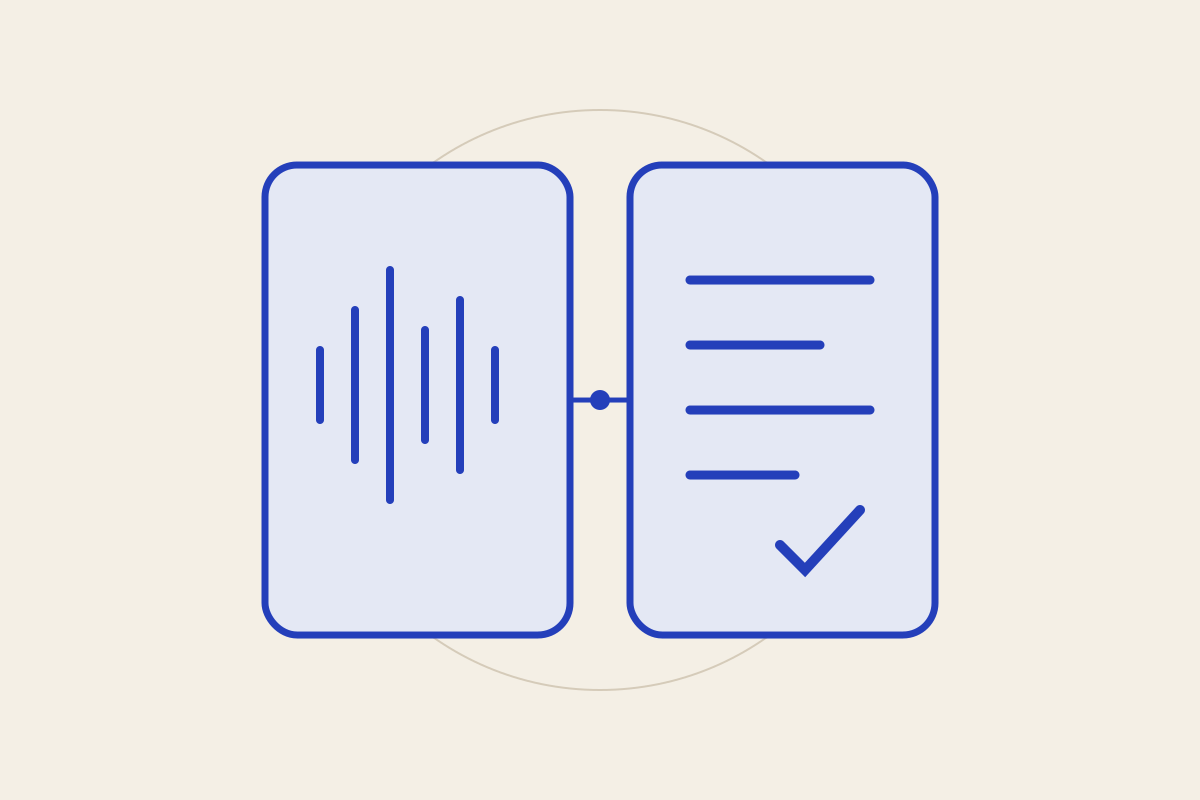
Imagine asking an agent to compare two suppliers. On one side, the conversation remains open: the constraints, the delivery date, the reason the cheapest option may be unsuitable. On the other, the actual comparison appears with its source material.
You touch a disputed term and ask where it came from. The agent brings up the document. You change one assumption and watch the recommendation change. You can keep the question in view while examining the answer.
A similar arrangement could help with a schedule, a design or a reconciliation. The important thing is continuity. Today, moving between the conversation and the artifact can make you carry the connection in your head. A thoughtful interface could carry more of it for you.
But two screens full of tiny chat windows would miss the point. More visible activity is not automatically more understanding.
The unit is the piece of work
I suspect the interface should organise itself around outcomes. Prepare this comparison. Resolve this discrepancy. Make this page ready to publish.
Each piece of work would have a clear state. What is being attempted? What has actually finished? What evidence supports that? What decision needs me? If I put the phone down and return later, I should be able to recover the thread without reading every intermediate message.
This is where multitasking becomes more interesting than simply running several apps at once. Several jobs may continue in the background, while the foreground shows the one that deserves attention. The interface would help me choose where to look.
The screen becomes a place to understand and direct work, while the machinery keeps moving beyond it.
There is a danger here. If every agent competes for attention, we will have rebuilt the notification problem at a much larger scale. A useful interface must know how to stay quiet. Completed routine work can settle into a record. A consequential uncertainty should be easy to find.
Voice starts the work. Sight helps judge it.
I like speaking a thought before it has become a tidy instruction. Voice makes that beginning easy. But a spoken answer is often insufficient when I need to compare alternatives or examine a result.
A table wants to be seen. A design wants to be looked at. A change wants a before and after. The interface needs to move naturally between conversation and material, letting each do what it does well.
This is why I do not think capable agents automatically make screens irrelevant. They may give screens a more selective and valuable job. The person needs less help navigating the machinery and more help seeing what the machinery has produced.
The hardware has to earn its place
I would judge an agent interface with ordinary questions. Can I understand an unfinished job at a glance? Can I correct one assumption without starting again? Can I inspect the source behind a confident answer? Can I stop an action before it happens? Can I put the device away without wondering whether the work has quietly stopped too?
A larger display that answers none of those questions is just more glass. A familiar phone that answers them beautifully may be enough. Weight, battery life and the ease of using it with one hand still matter; an exciting concept has to survive a normal day.
What has changed for me is the design question. I am curious again about what the object could be for.
The next phone that excites me may be the one that gives my intentions somewhere to go, and gives me a clear view of what comes back.
Opening the margins…